A conversation with Tina Coleman | Joy God's Way® about protecting our energy, finding contentment, building meaningful connections and learning to give ourselves a little more grace.
By Sarah Stone | Starting From Zero
I have a question for you….
When was the last time you had absolutely nothing to do, nowhere you needed to be and nobody waiting for you to do something for them?
And, perhaps more importantly, when was the last time you allowed yourself to enjoy that feeling without immediately thinking about everything you could be doing instead?
It’s something I’ve been thinking about quite a lot recently, particularly as I navigate one of the busiest chapters of my life, with a return to the UK on the horizon, exciting developments across my businesses, new opportunities emerging through Substack and all the everyday responsibilities that don’t simply disappear because life happens to be changing around you.
There are days when my mind is already six months ahead of where I am physically, mentally working through everything that needs to happen before I’ve even finished what I’m supposed to be doing today.
And I know I’m not alone.
We’re in an era that celebrates productivity, encourages us to fill every available moment and often makes us feel that if we’re not moving forward, achieving something or working towards the next goal, we’re somehow falling behind.
But somewhere between the endless to-do lists, the responsibilities we willingly take on and the expectations we place upon ourselves, I wonder whether we’ve forgotten something rather important.
Being busy and living a fulfilling life are not necessarily the same thing.
That was the starting point for my latest Starting From Zero conversation with Tina Coleman | Joy God's Way® and creator of The 7 Faces of Exhaustion™, whose warmth, kindness and infectious energ have made her somebody I’ve thoroughly enjoyed getting to know through our Substack communities.
I’d been looking forward to our conversation for quite some time, having watched Tina’s previous Lives, enjoyed her wonderfully encouraging Notes and admired the way she brings people together through conversations that feel genuinely personal.
What unfolded was a lovely reminder that sometimes the most valuable conversations aren’t the ones that give us another strategy for doing more, but those that encourage us to think about what we’re already doing and whether it’s creating the life we actually want.
And, as Tina rather brilliantly reminded us, there’s certainly no award waiting for the person with the busiest diary.
After more than 40 years in corporate America and over ten layoffs, Tina has experienced her share of unexpected changes, professional reinvention and moments when life hasn’t unfolded quite as she imagined.
Those experiences eventually became the foundation of Joy God’s Way®, a Christian-based publication and community where she shares personal reflections, Scripture-rooted encouragement and practical resources to help women navigate the different seasons of their lives.
Her faith is central to her work, and she speaks openly about how it has helped her navigate uncertainty, but what I particularly appreciate about Tina is that her message also opens the door to conversations that so many of us can relate to, regardless of our individual beliefs.
We all experience moments when life becomes overwhelming, when our priorities need reconsidering or when we find ourselves wondering whether the things we’re working so hard towards are actually making us happy.
And Tina has taken those experiences and created something meaningful from them.
Her signature 7 Faces of Exhaustion™ framework encourages women to recognise that exhaustion isn’t always simply a physical need for rest, but can also be connected to our emotions, relationships, sense of purpose and the demands we place upon ourselves.
It’s a subject she explores in her article, The 7 Faces of Exhaustion™ (And Sleep Won’t Fix Most of Them), alongside a wider series of articles that explore the different ways our energy can become depleted.
During our Live, Tina also referred to the career experiences and repeated layoffs that prompted her to look more closely at the relationship between being busy, building a career and finding meaning in what we do.
I loved that she was so open about the fact that, for much of her life, she was somebody who could fill almost every available moment with work, studying, ministry and social commitments, and that it took significant changes in her circumstances to begin questioning whether she was genuinely fulfilled or simply accustomed to being constantly occupied.
It’s an interesting distinction, isn’t it?
Because sometimes being busy becomes so familiar that we don’t even stop to question whether it’s how we want to live.
The busy badge nobody is handing out…
One of my favourite moments came when Tina began talking about the way we prioritise our lives, particularly as women who are often accustomed to organising our time around the needs, expectations and responsibilities of other people.
She explained how easily our own plans can become the things we postpone, because there’s always somebody else who needs something, another commitment that appears more urgent or another opportunity to be helpful.
And while there’s something wonderful about being somebody other people can rely upon, Tina encouraged us to consider what happens when continually putting everybody else first becomes our default way of living.
The things we want to do for ourselves can wait until tomorrow, next week or perhaps when life becomes a little quieter.
Except, of course, life rarely sends us a convenient invitation announcing that everything has finally settled down and we’re now free to enjoy ourselves.
Instead, weeks become months, months become years, and the moments we imagined we’d eventually make time for quietly slip further down the list.
Tina made us laugh when she pointed out that nobody receives a special honour for being constantly occupied, and I found myself agreeing wholeheartedly because I’d been thinking exactly the same thing.
“The busyness, you get no badge for it.” — Tina Coleman
I think that’s a wonderful reminder for those of us who have spent years measuring our progress by how much we’ve accomplished, because while ambition and achievement can be enormously rewarding, neither should require us to sacrifice every opportunity to enjoy the life we’re working so hard to create.
And perhaps the most important question isn’t whether we’re doing enough, but whether we’re making enough time for the things that matter.
What would you do with one extra hour?
During our conversation, I asked Tina a question that I think reveals rather a lot about our priorities.
If she suddenly had one extra hour in her day, completely free of responsibilities and expectations, how would she choose to spend it?
Her answer was beautifully simple.
She’d sit somewhere peaceful, preferably near the lake where she lives, and enjoy reading a good book.
No complicated plans, no extraordinary adventure and certainly no additional task to complete.
Just the pleasure of having an uninterrupted hour to lose herself in the pages of a book, enjoy the quiet and allow herself to be completely present.
I loved that answer because it reminded me of something I’d experienced just a few weeks earlier.
In the middle of preparing for our move back to the UK, while juggling work commitments, exciting new projects and what felt like a thousand different things demanding my attention, a friend announced that we were going away for a girls’ weekend.
It wasn’t presented as another possibility to squeeze into the diary.
It was happening.
And although part of me could immediately think of everything I needed to do, I went.
During the drive upstate, we spent hours chatting, laughing and enjoying one another’s company, but there was also a period when the conversation naturally became quiet and everybody simply settled into watching the autumn scenery passing by.
Nobody reached for their phone, nobody felt the need to fill the silence and, for once, there wasn’t anything I needed to organise or accomplish.
I just sat there, looking out of the window at the changing colours of the trees.
It sounds like such a small thing, but I can’t remember the last time I’d spent several hours travelling somewhere without feeling the need to use that time productively.
And it was wonderful.
What struck me afterwards was that the weekend hadn’t taken anything away from the things I needed to accomplish.
If anything, it had given me something back.
The opportunity to rest, reconnect and return to everything with a little more perspective.
Sometimes the moments that restore us are surprisingly ordinary, but we have to make room for them in the first place.
Recognising the different ways we become exhausted
One of the most interesting parts of our conversation was Tina’s explanation of her 7 Faces of Exhaustion™ framework, which grew out of her own experiences and her desire to help women better understand what they’re feeling.
Because when we say we’re exhausted, we often assume that the solution is simply more sleep, a quieter weekend or a few days away from our usual routine.
But what happens when we return from that break and still feel depleted?
Tina’s framework explores seven different forms of exhaustion: physical, emotional, mental, spiritual, social, compassion fatigue and purpose exhaustion.
Some of these are immediately recognisable, while others invite us to think more carefully about the less obvious ways we can become overwhelmed.
We might be physically tired because we’re not getting enough rest, mentally exhausted because our minds are constantly processing information or emotionally drained because we’re carrying concerns that rarely find their way onto a conventional to-do list.
We might feel socially depleted after spending too much time meeting other people’s expectations, experience compassion fatigue through continually caring for others or begin to question our sense of purpose when the things we’re doing no longer feel meaningful.
Tina’s framework is a personal, faith-rooted approach to reflection rather than a medical diagnosis, but I think there’s real value in the invitation to look beyond the general feeling of being tired and consider what might actually be contributing to it.
As she explained during our conversation:
“Without naming it, you can’t heal from what you haven’t named.” — Tina Coleman
It’s a thought that stayed with me because awareness is such an important part of intentional living.
We can’t always change our circumstances immediately, and there will inevitably be seasons when our responsibilities are greater than we’d like, but recognising what’s happening gives us an opportunity to make more conscious decisions about how we respond.
And sometimes that begins with something as simple as acknowledging that we need a little more space.
You don’t have to host the overwhelm party
If the busy badge was one of the funniest moments of our conversation, Tina’s reference to the overwhelm party was another that I knew would stay with me.
We were discussing what happens when life begins to feel as though everything is happening at once, and I shared how the news of our upcoming move had initially sent my mind racing through everything that would need to happen over the following months.
As somebody who naturally thinks ahead, I can quite easily visualise an entire project, the individual steps involved and all the potential complications before I’ve even begun.
Usually, that’s an advantage.
But when there are several major things happening simultaneously, it can also become overwhelming, particularly when the mind begins treating every future responsibility as though it needs to be resolved immediately.
Tina reminded me that although we can make plans, take responsibility for our decisions and do our best to create the outcomes we’re hoping for, we don’t have to carry the weight of controlling absolutely everything.
And she delivered that reminder with one of the best lines of the afternoon.
“You don’t have to be the host or hostess of the overwhelmed party.” — Tina Coleman
I absolutely loved that.
Because it’s such a wonderfully visual way of describing something many of us do without even realising it.
We invite every possible concern into our minds, give each one a seat at the table and then wonder why we’re finding it difficult to enjoy the moment we’re actually living.
Tina encouraged us to recognise that life is always going to involve a certain amount of uncertainty, and that although planning is important, we also need to leave room for the unexpected opportunities, detours and experiences that might take us somewhere even better than we’d originally imagined.
She compared it to planning a journey, where we have a destination in mind and a route to follow, but might discover something interesting along the way that encourages us to take a different path.
I thought that was a particularly lovely analogy for Starting From Zero, because so much of what we’re exploring through these conversations is the idea that our lives and businesses don’t have to follow one predetermined route.
Sometimes the detours become the most interesting part of the journey.
The relationships that make life richer
Although our conversation began with the idea of living beyond the busy life, it naturally moved into something that Tina and I both feel particularly passionate about: the importance of genuine connection.
We spoke about the relationships we’ve developed through Substack, the difference between simply collecting subscribers and creating a community, and why the way we interact with people matters just as much as the content we publish.
Tina shared how her own Substack journey changed when she began using Notes more regularly, moving beyond simply publishing articles to sharing reflections, engaging with other creators and participating in conversations.
For several months, she’d had a relatively small audience, but as she began connecting more actively, she noticed a significant increase in subscribers and, perhaps more importantly, found herself building relationships with people whose perspectives and experiences she genuinely enjoyed.
We both agreed that one of the things that makes Substack special is the opportunity to move beyond the polished highlights we often see elsewhere online and develop connections through thoughtful conversations.
But Tina also made an important point about protecting those relationships.
She described how she approaches her community chat almost as though she’s welcoming people into her home, creating a space where members can talk, share experiences and enjoy being part of something together.
When somebody arrives simply to promote their own publication without taking the time to participate, it can feel rather like a stranger walking through your front door and immediately beginning to advertise something to your guests.
It was a brilliant analogy, and one that led to a valuable discussion about boundaries, respect and the responsibility we have to the communities we’re creating.
Because building a welcoming space doesn’t mean we have to accept every behaviour, and protecting the atmosphere that makes people feel comfortable is part of caring for the relationships we’ve developed.
Tina also reminded us that losing a subscriber isn’t necessarily something to fear, particularly if it means the people who remain are those who genuinely connect with what we’re sharing.
I couldn’t agree more.
Having spent years building communities, hosting events and bringing people together through my businesses and Intentional Living Magazine, I’ve come to believe that the quality of our relationships will always be more meaningful than the number of names on a list.
And when we’re intentional about how we connect, we create something that has the potential to enrich our lives far beyond the platform where those relationships began.
A little more grace, please
As we approached the end of our conversation, I asked Tina what advice she would give to somebody hoping to create more fulfilment in their everyday life, particularly as we move towards a season when family commitments, travel, work and expectations can make everything feel even busier.
Her answer was one word.
Grace.
And I have to say, it gave me goosebumps.
Tina spoke about the importance of extending grace to ourselves as well as to the people around us, recognising that we’re all learning, growing and navigating experiences that don’t always unfold exactly as we’d planned.
She encouraged us to be a little kinder to ourselves when things don’t go according to plan, to stop expecting every moment to be perfect and to remember that the people around us may also be carrying challenges we know nothing about.
It’s a particularly valuable perspective during the holidays, when expectations can become so high that we sometimes forget the reason we’re gathering together in the first place.
There will be family conversations that don’t go quite as expected, plans that change at the last minute and occasions when somebody says or does something that tests our patience.
But as Tina reminded us, we can choose how we respond.
We can decide to spend the entire occasion wishing things were different, or we can make a conscious effort to appreciate the opportunity to be present, enjoy the people we’re with and recognise that not everything needs to be exactly as we imagined.
And perhaps we can extend that same understanding to ourselves.
We don’t have to complete every task, meet every expectation or have every detail of the future worked out before we’re allowed to enjoy today.
Sometimes it’s enough to acknowledge where we are, appreciate what we have and give ourselves permission to experience the moment.
As Tina said:
“Just be in the moment because so many times we don’t live in those moments and we miss it.” — Tina Coleman
I think that’s something worth remembering.
Because while we can always make another plan, create another goal or add something else to our list, we can’t go back and relive the moments we were too busy to notice.
Five takeaways for living beyond the busy life
If there’s one thing I hope you’ll take from my conversation with Tina, it’s that creating a more fulfilling life doesn’t necessarily require an enormous change, a completely different routine or another ambitious project to add to your already overflowing diary.
Sometimes it begins with the smallest decisions, made a little more consciously.
Here are five ideas to take into your own week.
1. Stop wearing busyness as a badge of honour.
The next time somebody asks how you are, notice whether your automatic response is to tell them how busy you’ve been, and consider whether the things filling your days are genuinely contributing to the life you want to create. Being productive can be wonderfully satisfying, but having a packed schedule isn’t a measure of happiness, success or personal worth, and there’s no prize for being the person who manages to squeeze the most into every available hour.
2. Make time for something that has no purpose other than enjoyment.
Think about Tina’s wish to spend an uninterrupted hour reading beside the lake, or my experience of simply watching the autumn scenery pass by during a weekend away, and ask yourself what small pleasure you’ve been postponing because it doesn’t seem sufficiently productive. Whether it’s reading, walking, gardening, meeting a friend or enjoying a quiet coffee, make space for something that restores you without expecting it to achieve anything else.
3. Pay attention to what’s really draining your energy.
If you’re feeling exhausted, take a moment to consider whether the tiredness is physical, emotional, mental or connected to another area of your life, rather than automatically assuming that you simply need to push through or become better organised. Tina’s 7 Faces of Exhaustion™ framework offers a useful opportunity for reflection, and recognising patterns in how you feel may help you identify where you need more rest, support, boundaries or meaningful change.
4. Give yourself permission to protect your time and your relationships.
Not every request requires a yes, and not every invitation, obligation or opportunity deserves a place in your diary simply because somebody else believes it’s important. Be thoughtful about the people and activities you give your energy to, create boundaries that support the kind of life and community you want to build, and remember that saying no to something can also mean saying yes to something that matters more.
5. Choose grace, especially when life doesn’t go according to plan.
Give yourself permission to be a work in progress, recognise that not every situation will unfold exactly as you hoped and practise being present rather than constantly anticipating what might happen next. Whether you’re navigating a major life change or simply dealing with the ordinary frustrations of a busy week, a little more patience, perspective and kindness towards yourself and others can make a meaningful difference to the way you experience everyday life.
Making room for the moments that matter
What I loved most about spending time with Tina was the feeling I had as our conversation came to an end.
Despite talking about exhaustion, responsibilities, uncertainty and the many demands of modern life, I didn’t feel weighed down by any of it.
Quite the opposite.
I felt lighter.
There’s something rather wonderful about spending time with somebody who has experienced so much, learned from it and arrived at a stage of life where she can speak about the future with genuine enthusiasm, warmth and a wonderful sense of humour.
Tina reminded me that we don’t have to stop being ambitious, abandon our responsibilities or give up the things we’re passionate about in order to create a more fulfilling life.
We simply need to become a little more conscious of the choices we’re making along the way.
For me, that’s what intentional living has always been about.
Not creating a perfect life, or one that’s free from challenges, but recognising that the everyday decisions we make about our time, energy, relationships and priorities are gradually shaping the life we experience.
And perhaps the next time we find ourselves telling somebody how incredibly busy we’ve been, we might stop for a moment and ask a different question.
Yes, but have I made time to enjoy any of it?
Because the goal isn’t simply to have a full life.
It’s to have a life that’s full of the things that matter.
Discover more from Tina Coleman
If you enjoyed this conversation, I’d love you to explore Tina’s publication, Joy God’s Way®, where she shares her personal experiences, thoughtful reflections and practical resources for women who want to create more space for contentment, purpose and joy.
Her work is rooted in her Christian faith, but her warmth, honesty and encouragement offer plenty of opportunities for reflection, particularly if you’re interested in understanding the different ways our energy can become depleted and how we might begin to restore it.
Explore Tina’s writing:
Welcome to Joy God’s Way® — Tina’s introduction and resources
The 7 Faces of Exhaustion™ — explore Tina’s framework and article series
I’d also love to hear your thoughts in the comments.
If you had one extra hour in your day that belonged entirely to you, how would you spend it?
And perhaps more importantly, what’s stopping you from making a little room for it now?
Thank you, Tina, for such a lovely conversation, and thank you to everybody who joined us live.
Until next time,

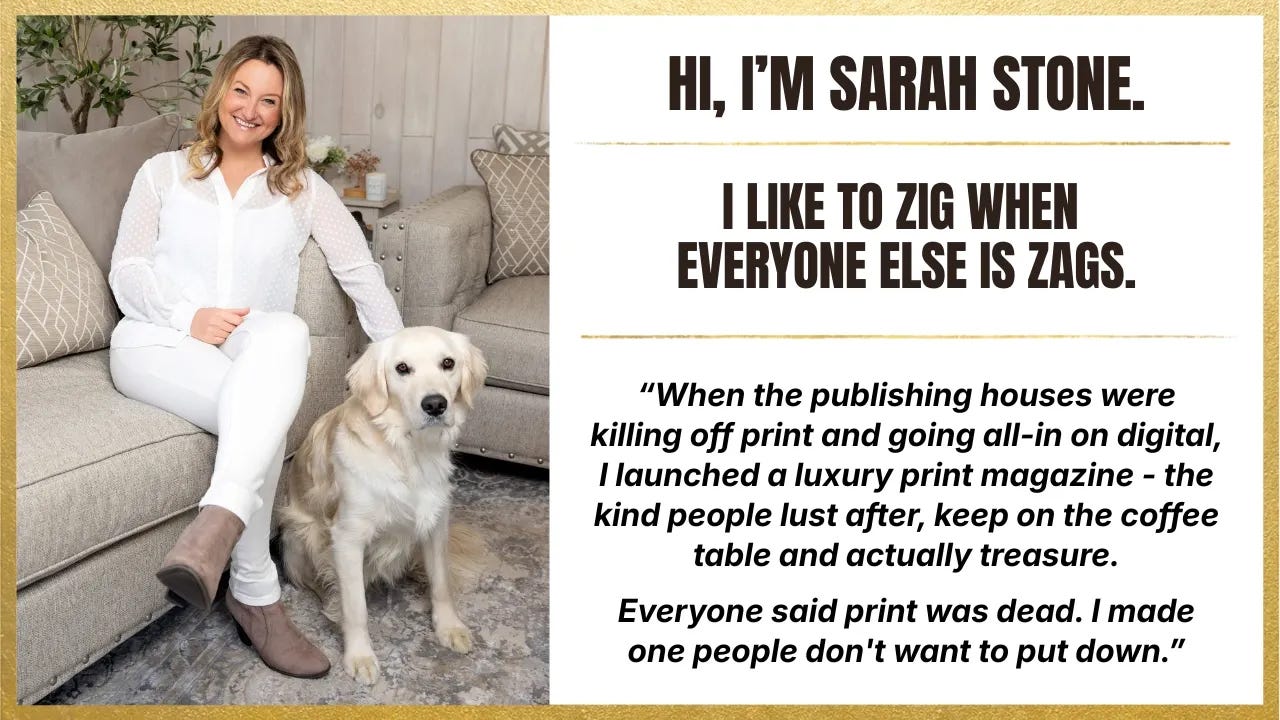
Starting From Zero is for midlife women, female founders, experts and authors who are ready to stop playing small and build a life, home and business that reflects who they really are.
Wherever you are in the journey, this space is here to meet you where you’re at and help you move forward with more confidence, resilience and intention.
✔ You’re done playing small.
✔ You’re done apologizing.
✔ You’re done standing on the sidelines.
✔ You’re done hiding.
✔ You’re ready to pursue your version of success.

This is where we not only talk about the real work of building your next chapter - we take bold action towards what matters most. I share writing, tools, reflections & conversations around:
Intentional Living - Consciously designing a life on purpose and focusing on what matters the most.
Starting From Zero - How to begin again with self-trust, resilience, curiosity and courage at any age or stage of life.
Community - The power of surrounding yourself with the right people as you step into your next chapter of new beginnings.
Entrepreneurship - The honest realities of building a business, growing something meaningful and creating success on your terms.
Visibility - How to build a trusted presence, use your voice, show up and stop being the industry’s best-kept secret.
Creativity - Creative ways to ‘Zig When Every Else Is Zagging’ - something I’ve lived my life by.

What “Starting From Zero” means
Starting From Zero is about having the opportunity to have a clean slate, fresh perspective and new beginning in any moment you choose.
My hope is that this community finds the women starting out on Substack who don’t know where to begin but are seeking their people - here is a great place to start!
It’s the moment when you decide to begin again - with more truth, courage, curiosity and self-trust than ever before.
It’s for the woman who is done feeling guilty, overthinking, feeling judged or waiting for the perfect time..
It’s about creating a life and business that supports you in every season.

Annual Membership Special
Pay Annually & Unlock Bonus Content:
✔ The Substack Live Series How-To Workshop - Learn how to create your own Substack Live Series. Includes a 30-day, step-by-step roadmap to create, launch and confidently host your own Substack Live interview series - complete with my guest outreach scripts, design templates, interview framework, promotion plan, behind-the-scenes process and everything I learned creating Starting From Zero.
✔ Quarterly Workshops - 4 x Members-only live workshops from dedicated Wellness Experts & Special Guests.
✔ Private Networking Sessions - Quarterly Substack Social, Annual-members-only Zoom to learn, connect, collaborate and meet other women doing great things.
✔ 10% off working with me 1:1 - When you’re ready for hands-on, strategic support, your subscriber discount applies to a Power Session.
→ See full details on the Become a Member page.


Free For Everyone
Start here if you would like to receive public posts, selected guidance and access to the Intentional Conversations.
✔ The Journal - Honest essays, twice a month.
✔ A Daily Intention in Notes - Small prompts that keep you moving.
✔ Intentional Conversations - Live conversations about Starting From Zero and Redefining Success.


Become A Monthly Paid Subscriber
If you want premium content and closer access to my best work.
✔ The Editor’s Letter - One deep-dive article every month that highlights the live interviews, insights and the honest take-aways of nurturing a sustainable business and lifestyle.
✔ A Daily Intention in Notes - Small prompts that keep you moving.
✔ Intentional Conversations - Live conversations about Starting From Zero and Redefining Success.
✔ The Annual Vision Board Workshop - A guided session to map the year ahead with intention. Takes place every January.

Annual Membership Special
Pay Annually & Unlock Bonus Content:
✔ Quarterly Workshops - 4 x Members-only live workshops from dedicated Wellness Experts & Special Guests.
✔ Private Networking Sessions - Quarterly Substack Social, Annual-members-only Zoom to learn, connect, collaborate and meet other women doing great things.
✔ 10% off working with me 1:1 - When you’re ready for hands-on, strategic support, your subscriber discount applies to a Power Session.
→ See full details on the Become a Member page.